
Colombo: A newly released independent analysis has raised serious concerns over the proposed initial public offering (IPO) of Janashakthi Limited (JXG), cautioning investors against subscribing at current price levels due to rising macroeconomic risks and valuation concerns.
At LKR 10.00, you are being asked to pay a nearly 40% premium over the post-IPO book value for a heavily indebted financial holding company heading straight into a macroeconomic hurricane.
The IPO is asking investors to pay LKR 10.00 per share.
When we strip away the rosy “stable macro” assumptions and recalculate the SOTP model for a high-inflation, rising-rate environment with a standard sentiment discount, the true fair value is closer to LKR 6.34. At the offer price of LKR 10.00, you are not just paying a premium; you are absorbing all the downside risk of a macroeconomic crisis while paying for growth that mathematically cannot materialize in the near term.
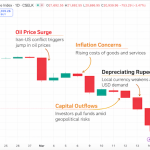
The report highlights that Sri Lanka is facing a challenging economic environment shaped by external shocks, including the ongoing Middle East crisis and the financial burden of post-disaster recovery following Cyclone Ditwah. These developments, analysts say, are likely to place pressure on the Sri Lankan rupee, increase inflation, and potentially lead to tighter monetary policy.
According to the analysis, such conditions could compel the Central Bank of Sri Lanka to raise interest rates in order to stabilize the currency and manage inflationary pressures. This shift, however, may create a difficult operating environment for financial services companies, particularly those with significant exposure to fixed-income markets and lending activities.
JXG, which operates across investment banking, insurance, and non-bank financial services, is seen as particularly sensitive to these macroeconomic changes. The report notes that rising interest rates could negatively impact its bond trading and investment banking operations by reducing the value of fixed-income securities. At the same time, its asset financing segment may face increasing credit risk as borrowers struggle with higher borrowing costs and reduced income levels.
The insurance segment, while relatively more stable, is also expected to face headwinds. Higher inflation could drive up claims costs, while economic strain may lead to lower policy renewals and weaker premium growth.
In addition to macroeconomic concerns, the report identifies several financial risks within the company. It points out that JXG had a negative working capital position of approximately LKR 5.38 billion as of March 2025, indicating short-term liquidity pressures. The company also carries a substantial debt burden, with both short-term and long-term borrowings contributing to elevated financial risk.

Analysts further questioned the allocation of IPO proceeds, noting that only a limited portion is intended for debt reduction, while a larger share is earmarked for expansion into microfinance and overseas markets. This strategy, they argue, could expose the company to additional risks at a time when domestic economic conditions remain uncertain.
Valuation has emerged as a central point of concern. The IPO is priced at LKR 10.00 per share, while the company’s post-listing net asset value (NAV) is estimated at approximately LKR 7.20 per share. The analysis suggests that, when adjusted for current macroeconomic risks and market conditions, the fair value may be closer to LKR 6.34 per share.
The report also emphasizes that holding companies such as JXG typically trade at a discount to their underlying asset values, particularly during periods of economic uncertainty. In such environments, investors tend to demand higher risk premiums and may be cautious about complex corporate structures and capital allocation decisions.
In its conclusion, the analysis advises investors to exercise caution, arguing that the IPO pricing reflects optimistic assumptions about economic stability that may not hold in the current environment.
“Investors are effectively being asked to pay a premium for growth that may not materialize in the near term, while taking on significant macroeconomic risk,” the report states.
The findings add to growing debate within market circles about valuation discipline and risk assessment as Sri Lanka navigates a fragile and uncertain economic recovery.